Special price
Delivery charges and applicable taxes are calculated at checkout.
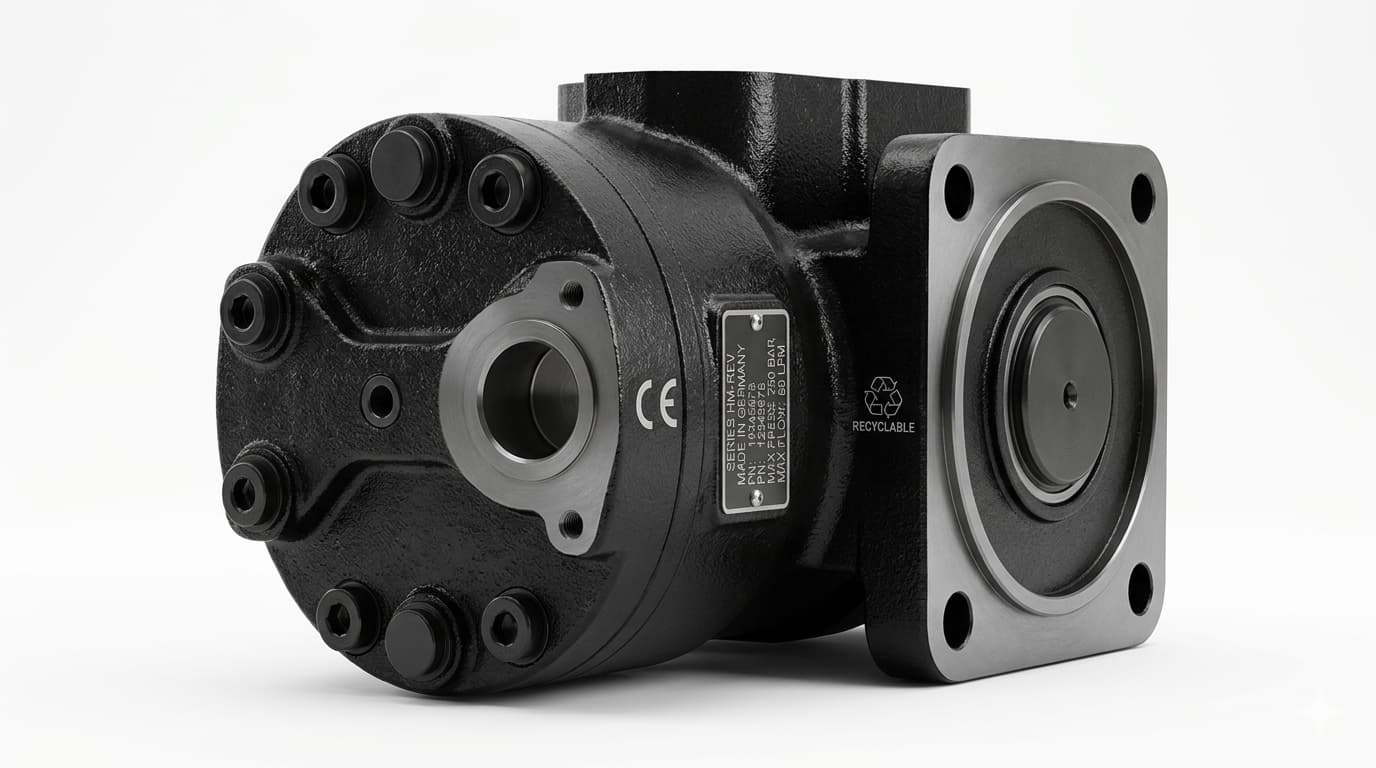
Hydraulic motors operate within a closed hydraulic circuit. A hydraulic pump supplies highly pressurized fluid to the motor's inlet port. This pressurized fluid pushes against the motor's internal moving components (gears, vanes, or pistons), forcing the assembly to turn. This rotation spins the output shaft, creating rotary mechanical force (torque). Once the fluid passes through and spends its energy, it exits through a discharge port and returns to the system reservoir. 2. Primary Types of Hydraulic Motors • Gear Motors: Simple, highly economical, and easy to service. They are ideal for high-speed, medium-pressure applications, though they exhibit higher internal leakage at very low speeds. • Vane Motors: Feature a rotor with sliding vanes enclosed in an eccentric housing. They offer smooth power delivery and quiet operation in a compact frame.
• Displacement: The volume of fluid required to turn the motor shaft one full revolution, typically measured in cubic centimeters (cc) or cubic inches (CID). • Torque output: The rotational force generated, which is determined by fluid pressure drop and motor displacement. • Speed (RPM): Regulated directly by the volume flow rate entering the motor. Options range from high-speed setups (up to 10,000 RPM) to ultra-slow settings (down to 0.5 RPM)
Ask the store about this product. Answers show here.
No reviews yet
Be the first to share your experience with this product.
 RgOnlineSale
Genuine products with a GST invoice, secure payments and easy returns, delivered across India.
Online payments are processed securely by Razorpay. UPI apps, cards and net banking are supported.
© 2026 RgOnlineSale. All rights reserved.