Special price
Delivery charges and applicable taxes are calculated at checkout.
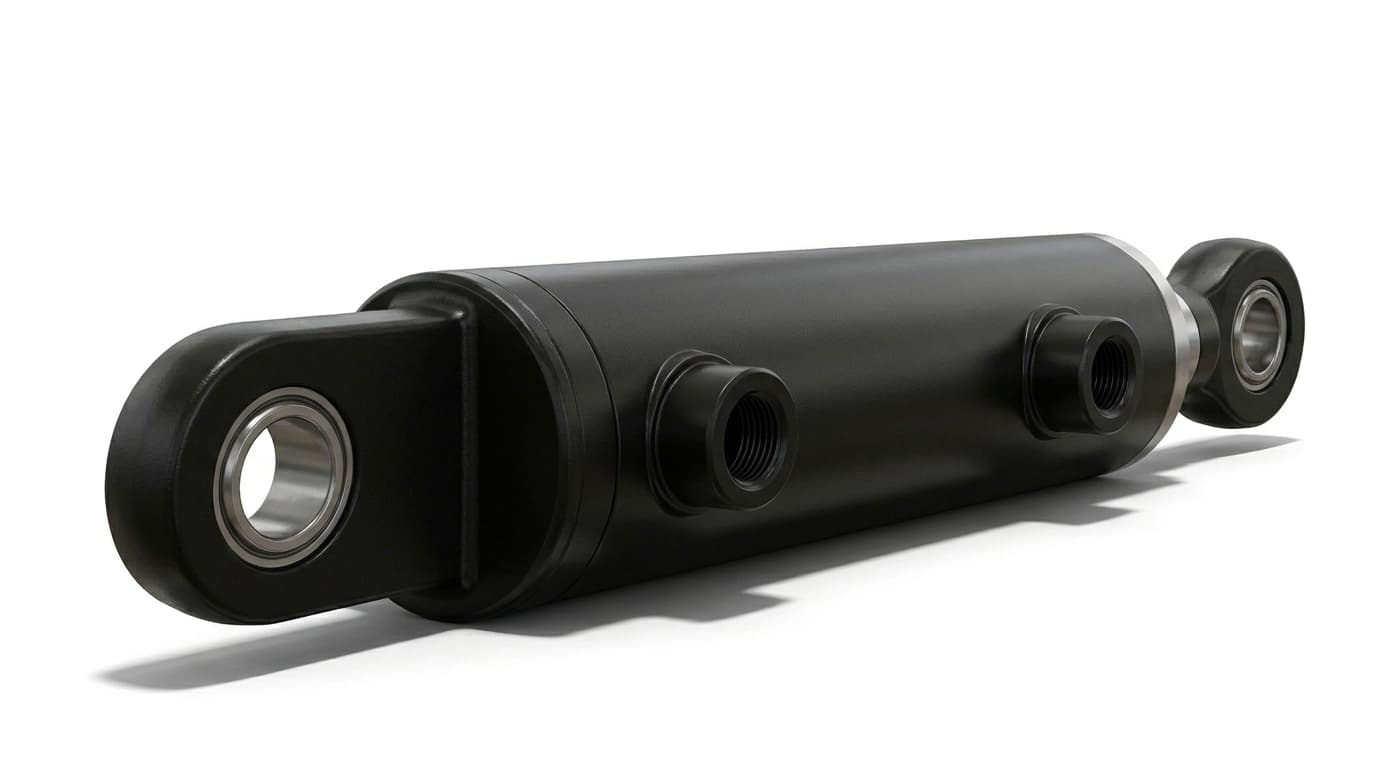
• Fully Assembled Cylinder Body: The main barrel containing the pre-installed piston, chrome rod, internal seals, head gland, and base cap. • Port Plugs: Plastic or metallic shipping plugs threaded into the fluid ports to prevent dust, moisture, and debris from entering the internal chambers during transit. • Mounting Hardware (Configuration Specific): Depending on the style ordered, this includes components like clevis pins, cotter pins, or flange bolts. • Quality Inspection Certificate: Documentation verifying factory pressure-testing (typically tested at 1.5 times the rated operating pressure) and quality clearance. • Instruction & Safety Manual: A guide covering storage, basic installation alignments, and initial air-bleeding procedures. ⚙️ Materials of Construction Hydraulic cylinders are engineered using heavy-duty, high-tensile materials to withstand extreme internal pressures (often ranging from 2,000 to 5,000+ PSI). • Cylinder Barrel (Tube): Made from ST52, E355, or ASTM A513 DOM (Drawn Over Mandrel) steel. The internal bore is honed and skived to a mirror-like finish (micro-inch roughness) to minimize seal friction. • Piston Rod: Machined from C45 or 4140 carbon steel, ground and polished, then treated with hard chrome plating (usually 20 to 30 microns thick) for maximum scratch and corrosion resistance. Induction-hardened rods are used for debris-heavy environments. • Piston & Gland (Head): Typically cast from ductile iron (Grade 65-45-12) or machined from carbon steel to provide excellent bearing support and prevent metal-on-metal galling against the steel tube. • Seals & O-Rings: High-performance elastomeric compounds chosen for fluid compatibility and temperature resistance. Common materials include Polyurethane (PU) for main U-cups, Nitrile (NBR) for static seals, and Fluorocarbon (Viton) for high-heat applications. 📏 Size & Dimension Metrics When ordering or specifying a hydraulic cylinder, its size is defined by four core dimensions: • Bore Diameter: The inner diameter of the cylinder barrel. This is the most critical metric because it determines the total force the cylinder can push or pull at a given system pressure. • Rod Diameter: The thickness of the chrome shaft. A thicker rod prevents bending under heavy compression loads but reduces the available fluid volume on the retraction (pull) side. • Stroke Length: The total distance the piston rod can travel from a fully retracted position to a fully extended position. • Retracted Length (Pin-to-Pin): The total distance between the center of the mounting holes when the cylinder is completely closed. This determines the spatial footprint required on your machinery. 🔧 Maintenance & Care Guidelines Proper care prevents premature seal failure, rod scoring, and fluid contamination—the leading causes of hydraulic system breakdowns. 🚿 Preventive Care • Keep the Rod Clean: Wipe down extended rods operating in abrasive environments (dust, sand, cement) to prevent debris from bypassing the wiper seal and entering the barrel. • Maintain Fluid Cleanliness: Filter your hydraulic oil regularly. Abrasive particulate matter suspended in the oil acts like sandpaper, rapidly destroying internal piston seals. • Check Alignments: Ensure the cylinder operates in a straight line. Side-loading or angular misalignment forces the rod against the head gland, causing uneven seal wear and bent rods. 🛑 Storage Practices • Retract Completely: Always store cylinders fully retracted so the polished piston rod remains protected inside the oiled barrel. • Grease Exposed Metal: If a cylinder must be stored extended or out in the open, coat the exposed chrome rod with a thick layer of anti-corrosion grease or protective wrap. • Keep Ports Sealed: Leave the shipping port plugs tightly installed until the exact moment you connect the hydraulic hoses to block moisture and airborne dust.
• Fully Assembled Cylinder Body: The main barrel containing the pre-installed piston, chrome rod, internal seals, head gland, and base cap. • Port Plugs: Plastic or metallic shipping plugs threaded into the fluid ports to prevent dust, moisture, and debris from entering the internal chambers during transit. • Mounting Hardware (Configuration Specific): Depending on the style ordered, this includes components like clevis pins, cotter pins, or flange bolts.
Ask the store about this product. Answers show here.
No reviews yet
Be the first to share your experience with this product.
 RgOnlineSale
Genuine products with a GST invoice, secure payments and easy returns, delivered across India.
Online payments are processed securely by Razorpay. UPI apps, cards and net banking are supported.
© 2026 RgOnlineSale. All rights reserved.